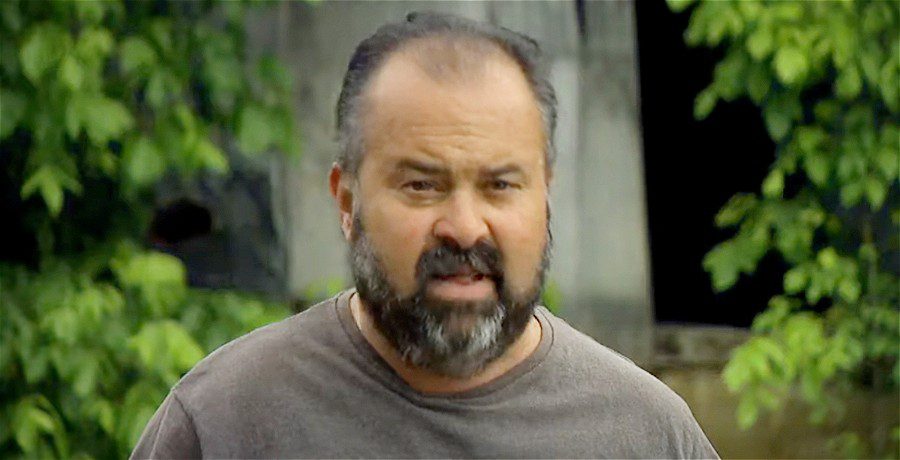
Clayface is the number one movie in the country. That’s exciting for an R-rated body horror movie about a Batman villain who’s hardly a household name. But is it a success? That’s a much more complicated conversation, and anybody giving you a definitive answer after one weekend is working with information the rest of us don’t have.
Clayface opened to $24 million domestically and $19 million internationally, bringing its worldwide debut to $43 million, with a production budget of $40 million.
You can already see where this goes. A roughly $40 million movie makes roughly $40 million worldwide, and suddenly people are celebrating that it broke even in its first weekend. Unfortunately, that’s not how any of this works.
Theaters keep a portion of ticket sales. Marketing costs money. Tax incentives can reduce production expenses, but we don’t necessarily know whether those savings are already reflected in the reported budget. Distribution arrangements, financing, and participation deals all affect what comes back to the people who paid for the movie. Worldwide box office is a gross, not a check deposited into Warner Bros.’ bank account.
Could Clayface finish somewhere around $80–100 million worldwide? That seems like a possible outcome to me, but it’s an estimate, and it wouldn’t automatically establish profitability. The movie received an A- CinemaScore, and Halloween is still ahead of it. How it holds over the next few weeks will tell us a lot more than its opening-weekend ranking.

What interests me is that DC gave this movie a chance at a relatively reserved budget. I’m a huge proponent of setting films up for success, especially when a studio wants to try something unusual. Even $40 million is a substantial amount for an R-rated horror movie. Personally, I would have loved to see this attempted for $20–30 million, but at least we aren’t having this conversation about a $150 million production.
The modern Evil Dead movies are among my favorite examples of why this matters. Evil Dead Burn carried a reported $20 million budget. A disappointing result at that level is a very different problem from a disappointing result on a blockbuster budget. Keeping costs under control gives a franchise room to survive a softer installment without requiring every movie to become a phenomenon.
Masters of the Universe illustrates the opposite concern. The Numbers lists its production budget at $200 million. My feeling is that this should have been a $60–80 million movie. Fans waited years for it, and spending that much meant it needed an enormous audience just to justify the investment. What the fuck are we doing setting these movies up with expectations that are so difficult to meet?
That’s part of why I appreciate the Clayface experiment, even though I found the film disappointing. Our own Matt Konopka had a mixed response, too, giving it three out of five in his review and describing “a muddy mixed bag of melty body horror and tonal inconsistencies.” I can wish the movie were better while still wanting studios to take more chances like it.
But there’s another complication here: we don’t know what DC wanted this particular investment to accomplish.
James Gunn has already said Clayface has a future in the DCU. That means this movie can also serve as an introduction to a character who will turn up elsewhere. It gets people familiar with him before the next appearance, the next comic they pick up, or whatever else DC has planned.
There’s value in that. How much value? We don’t know.
We don’t have numbers showing whether this movie encourages someone to read a comic, watch Creature Commandos or Harley Quinn, or keep an HBO Max subscription. We don’t know what its digital sales, rentals, licensing, and eventual lifetime revenue will look like. Those possibilities matter, but they aren’t a magic pile of money we can invent to declare a movie profitable.
It’s also why I think Gunn has a harder job than people sometimes acknowledge. Marvel spent years introducing characters and building audience attachment before those relationships paid off in The Avengers and beyond. DC has enormous characters, especially Batman, but it can’t assume that recognition transfers to everybody else. People have to get to know Clayface, Supergirl, Lobo, and all these other personalities before they care about seeing them together.
Maybe a relatively inexpensive Clayface movie that eventually breaks even would accomplish exactly what DC wanted. Maybe the studio expected a much bigger theatrical return. We aren’t in those meetings.

What I can speak to is my experience in this business. I’ve spent years watching horror movies struggle to get made, or get treated as disappointments, because making money wasn’t enough. The expectation was to make more money. There are only so many release dates and so many projects a studio will support, and every one of them is competing for those resources.
That’s what makes me nervous about looking at this opening and assuming everybody behind the scenes is thrilled. This isn’t me reporting that somebody at Warner Bros. told me they’re unhappy. It’s me recognizing how these companies tend to operate. A number one opening is nice. A much larger return is what they’re chasing.
And that’s the frustrating part of trying to make art inside publicly traded companies. With all these fucking mergers and pressure to deliver growth, a worthwhile experiment can still get judged against expectations that never made sense for it.
I’d love to see studios openly commit to a certain number of experiments each year, with budgets and expectations suited to the actual movies. Tell us you’re taking a chance. Then stand behind that decision when the result is respectable instead of enormous.
Blumhouse has built a business around managing risk through budgets, although I sometimes think the pendulum swings too far and the films could use more resources. There’s a balance. Give filmmakers enough to deliver the movie, without spending so much that a perfectly reasonable audience suddenly looks like a failure.
So, would I consider Clayface worthwhile if it ultimately breaks even? Yes. I love that they took the chance. I love that they gave an R-rated horror interpretation of this character a theatrical release. And I want an opening like this to leave room for more experiments, rather than become another reason to stop trying.
Is Clayface a financial success? We don’t have enough information yet. But I’d hate to see the lesson become that DC shouldn’t make movies like it. To me, the lesson is to keep the budgets reserved, set realistic expectations, and give these characters a fair fucking chance.
Categorized:Box Office News