When it comes to the work of legendary horror author Anne Rice and her iconic series The Vampire Chronicles, most conversations inevitably circle the same familiar figures: Lestat de Lioncourt, the Brat Prince himself, and his beautiful, tragic companion Louis de Pointe du Lac. Surrounding them are even more memorable men — Armand, Marius de Romanus, Daniel Molloy, and many more — all contributing to a wider vampiric history that, predominantly, has been dominated by white male figures.
That particular focus reflects the world into which the books were written, a world steeped in ancient aristocracies, old patriarchies, and centuries of male power. It also reflects some of Anne Rice’s own personal perspective, even though the character of Louis de Pointe du Lac was solely inspired by the author herself (but that’s a conversation for another day). Thankfully, adaptations like AMC’s Interview with the Vampire have broadened that general lens with a more diverse cast and critical take, enriching the universe in ways that feel both modern and true to the spirit of Rice’s work.
So, in continuing to broaden the general lens, so to speak, this article isn’t about the men of The Vampire Chronicles. As beloved as they are — and believe me, we could talk about Lestat (Sam Reid) and Louis (Jacob Anderson) all day here — this space belongs to the women right now.
Because while female characters in Anne Rice’s novels are fewer in number, the ones who do appear are incredibly impactful. They are powerful, terrifying, tragic, manipulative, visionary — sometimes all at once. From ancient queens and doomed children to witches, mothers, and monsters, the women of Rice’s vampiric world shape the story in ways that ripple through literal centuries.
Several of these women have already appeared “in the flesh,” whether in the 1994 film Interview with the Vampire, the 2002 film Queen of the Damned, the 2005-2006 Broadway musical Lestat, or in the 2022- AMC’s television adaptation Interview with the Vampire. Others are set to appear very soon, while some, as of now, have no sign of making the jump to screen and remain present only within the pages of the books themselves.
For Women’s History Month, we’re giving them all their due.
And yes, before we start: a lot of these women are not good, or do extremely questionable things. Believe me, I hate some of their actions, or them entirely, just as much as anyone else. But men get celebrated for their misdeeds all the time, so it’s only fair we spread that love equally.
(No, I’m not going to be able to cover every woman in the series. Sorry to all the Sybelle and Rose fans out there.)
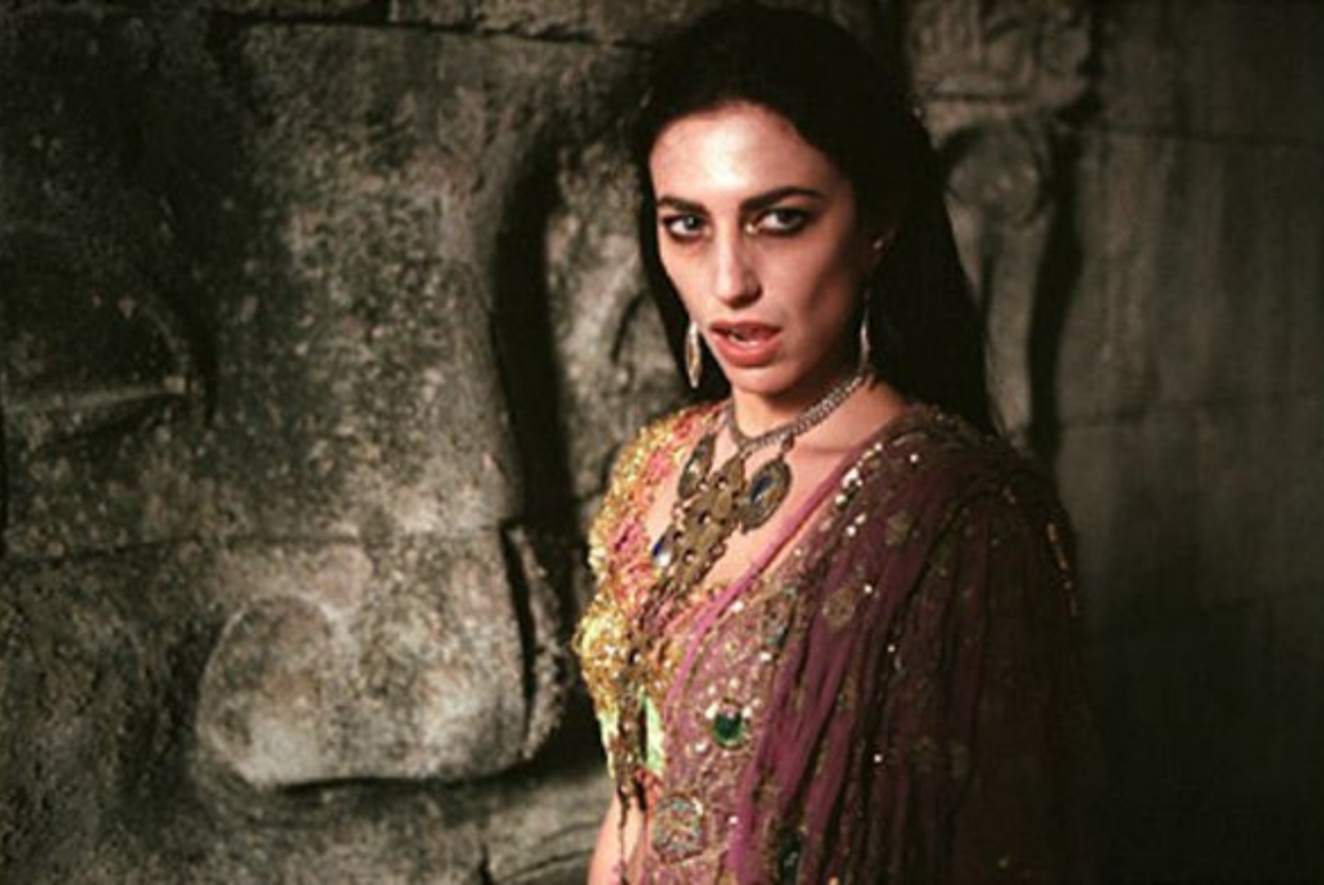
15. Pandora
Books She Appears In/Is Mentioned: The Queen of the Damned (1988), The Vampire Armand (1998), Pandora (1998), Blood and Gold (2001), Prince Lestat (2014), Prince Lestat and the Realms of Atlantis (2016), and Blood Communion (2018)
Portrayed On Screen: Claudia Black in the 2002 film Queen of the Damned
When I first started reading The Vampire Chronicles about 15 years ago, Pandora was actually the second book I picked up. I was at a garage sale with my mother, fresh off my first-ever read of Interview with the Vampire which had utterly consumed me. So, naturally, I saw Anne Rice’s name on the cover of a book and bought it. I tried to read it then — much to my confusion at the time — and put it down, only to return to it years later after having read through the entirety of the chronicles.
Born Lydia in the Roman Republic, 15 BC, Pandora first meets Marius de Romanus at the age of 10, when he asks her father for her hand in marriage, an offer her father refuses. Twenty-five years later, after a family betrayal that leads to a massacre, Pandora meets Marius again, only to learn he is not just a vampire, but one tasked with protecting the Queen and King of all vampires, Akasha and Enkil.
She is then turned into a vampire by Marius after almost dying at the hands of yet another vampire, and the two spend the next 200 years together protecting the ancient rulers. Their time together eventually ends, but not before Akasha forces Pandora to drink her ancient blood, making Pandora one of the few vampires to have ever tasted the Queen’s power directly.
After her separation from Marius, Pandora becomes withdrawn and melancholic, a morose beauty like many immortals, yet her influence on a character as powerful and long-lived as Marius cannot be ignored. And let’s not forget that she’s compelling enough to have her own book.

14. Merrick Mayfair
Books She Appears In/Is Mentioned: Merrick (2000) and Blackwood Farm (2002)
Both the title of the seventh novel in The Vampire Chronicles and the name of the character herself, Merrick Mayfair comes from the long line of witches featured in Lives of the Mayfair Witches. While the Mayfair family primarily belongs to that series, several members of the family cross over into The Vampire Chronicles.
A powerful witch known to the secretive supernatural order Talamasca, Merrick is approached to perform a very specific task: contacting the spirit of the dead vampire child Claudia for Louis de Pointe du Lac.
She succeeds, but the consequences are devastating. The encounter ultimately leads to Louis attempting to end his own life, a moment television viewers may recognize from Season 2, Episode 5 of AMC’s Interview with the Vampire. Before that happens, however, Merrick uses magic to make Louis fall in love with her and is turned into a vampire at his hand. After Louis’ near-death, Merrick joins forces with David Talbot and Lestat de Lioncourt to pull him back from the brink.
Merrick’s final appearance comes in the ninth book of the series, Blackwood Farm. When Lestat seeks help for the troubled Quinn Blackwood, who has been haunted since birth by a spirit named Goblin, Merrick once again turns to her magic. She successfully binds the spirit to this world, but in doing so, sacrifices herself, leaping into a fire with the physical manifestation of Goblin and destroying them both.
Is she manipulative? Absolutely. But a character bold enough to manipulate vampires, summon spirits, and sacrifice herself in a supernatural exorcism absolutely earns her place on this list, and, like Pandora, her own book.

13. Bianca Solderini
Books She Appears In/Is Mentioned: The Vampire Armand (1998), Blood and Gold (2001), Prince Lestat (2014), Prince Lestat and the Realms of Atlantis (2016), and Blood Communion (2018)
When I was eighteen, I dressed up as Bianca Solderini for Halloween and only one person knew who I was. Whatever.
Bianca Solderini was a blonde Venetian courtesan in the fifteenth century, famous for her lavish parties and even more so for her beauty. Those glittering gatherings, however, were merely a cover. Behind the celebrations, Bianca secretly murdered powerful men of Venice, targets chosen because of debts owed to her family.
The ancient vampire Marius de Romanus is drawn to her, as is his then-human ward and lover Armand (Amadeo when they meet). When Armand is mortally wounded, Bianca tends to him until Marius arrives. She does not know that Marius turns Armand into a vampire to save his life, but she remains close to both of them, hosting gatherings at Marius’ palazzo in Venice.
Everything changes when the vampire cult known as the Children of Satan attacks the palazzo. Marius is left burned and horribly disfigured, and Armand is taken by the coven. In order to better care for the injured Marius, Bianca agrees to become a vampire herself. She stays with him for centuries, helping him guard the ancient rulers of the vampire world, Akasha and Enkil, while also falling in love with him.
But Marius’ heart never fully belongs to her. When he confesses to Pandora that he would leave Bianca if Pandora returned to him, Bianca overhears the conversation and ultimately leaves.
The two are reunited centuries later in Prince Lestat and the Realms of Atlantis. One of the most haunting details of Bianca’s story, however, comes earlier where, during his time with the Parisian coven, Armand swears he once saw her outside Paris. Recognizing the danger she was in, he warned her to flee before the coven discovered her.
Bianca Solderini may not be the most famous vampire in the chronicles, but she is certainly unforgettable. Any true adaptation of Armand’s story in the future would be incomplete without her.

12. Jessica “Jesse” Reeves
Books She Appears In/Is Mentioned: The Queen of the Damned (1988), Prince Lestat (2014), and Blood Communion (2018)
Portrayed On Screen: Marguerite Moreau in the 2002 film Queen of the Damned
Yes, Jesse Reeves appears in the 2002 film Queen of the Damned. No, we’re not even going to talk about it, because using her as a replacement for Louis de Pointe du Lac was… a choice.
In the books, however, Jesse Reeves is first introduced in The Queen of the Damned. Descended from one of the longest-running familial lines connected to vampires, Jesse shows signs of supernatural abilities from a young age, able to see ghosts and spirits long before she understands what they are.
Naturally, this catches the attention of the secretive order known as the Talamasca, the group dedicated to studying and documenting supernatural phenomena across Anne Rice’s universe. Jesse eventually joins their ranks and is sent to New Orleans to investigate the events that took place in the publication of Interview with the Vampire.
While there, she encounters the spirit of Claudia, the vampire child created by Louis de Pointe du Lac and Lestat de Lioncourt, and that experience leaves Jesse dangerously ill and forces her exit from the investigation.
Back in New York during her recovery, Jesse discovers the subsequent publication of The Vampire Lestat, the autobiography written by Lestat himself. Fascinated, she travels to San Francisco to witness his infamous 1985 rock concert.
At that concert, chaos erupts. Jesse is gravely injured, and in order to save her life, her vampiric ancestor — whom we’ll be discussing later — turns her into a vampire as well.
With AMC’s Interview with the Vampire now reaching the point where Louis’ interview has been published for the world to see, Lestat’s infamous concert is inevitable. And with all that going on, there’s a chance Jesse Reeves might not be far behind either.

11. The Vampire Women of the Théâtre des Vampires — Celeste, Estelle, and Eglee
Books They Appear In/Are Mentioned: Interview with the Vampire (1976)… kind of
Portrayed On Screen: Suzanne Andrade as Celeste; Esme Appleton as Estelle; Genevieve Dunne as Eglee; all on AMC’s Interview with the Vampire Season 2
Season 2 of AMC’s Interview with the Vampire expanded the series’ vampire lore by introducing audiences to the Théâtre des Vampires. Once known as the Children of Darkness, this Parisian vampire troupe has a long and complicated history within the chronicles, one we’ll likely see even more of in the upcoming season centered on The Vampire Lestat.
Among the troupe were three ridiculous, wonderful, and thoroughly awful vampire women named Celeste, Estelle, and Eglee.
Celeste and Estelle appear only briefly in the original novel Interview with the Vampire, while Eglee was created entirely for the television adaptation. Even with their limited screen time, however, the trio left a strong impression.
Beautiful, theatrical, and downright cruel, it’s easy — and justified — to dismiss them because of their role in the trial of Louis de Pointe du Lac and Claudia. But they still delivered some memorable moments: Celeste and Eglee’s legitimate catfight, Estelle’s deeply unsettling fascination with Louis, the maker–fledgling bond between Celeste and Estelle, and Eglee’s spectacular purple outfit while perched on Santiago’s motorcycle in Season 2, Episode 2.
Unforgettable characters.
Still glad they’re all dead, though.

10. Lily
Portrayed On Screen: Najah Bradley in AMC’s Interview with the Vampire Season 1 Episode 1
Miss Lily may only appear for a few minutes in the pilot episode of Interview with the Vampire, but she is talked about often by the fandom, which, in itself, is an impressive feat.
A character created specifically for the television adaptation, the beautiful Lily works at the Fair Play Saloon, a brothel owned by the notorious Tom Anderson in 1910 New Orleans. Louis de Pointe du Lac, a closeted gay man at the time, frequently visits Lily, using their relationship as a cover for his sexuality. As we eventually learn, however, Louis often visits simply to talk.
In many ways, Lily becomes one of Louis’ earliest confidants. She is present the very first time Louis meets Lestat de Lioncourt, and the two men initially use her presence as a kind of social disguise for the growing intimacy between them — though this arrangement is clearly and understandably more for Louis’ comfort than Lestat’s.
Lily is even present during the first sexual encounter between the two men, reassuring Louis that it’s perfectly fine that he pursue his true desires before Lestat eventually uses his vampiric powers to put her to sleep so the two men can be alone.
Sadly, Lily’s story ends tragically. After Louis attempts to distance himself from Lestat, Lestat kills her, telling Louis that, “Miss Lily proved herself to be a poor substitute.”
Still, for the brief time she appears on screen, Lily plays a surprisingly important role in the beginning of Louis and Lestat’s complicated relationship, all while leaving behind a character full of personality and charm.

9. Bricktop Williams
Portrayed On Screen: Dana Gourrier in AMC’s Interview with the Vampire Season 1 Episodes 1-3
If you want a character who packs a punch with every line, every look, and every scene, look no further than Bricktop Williams.
Bricktop is one of the working girls in Louis de Pointe du Lac’s business on Liberty Street at the very start of his story in 1910 New Orleans. Her very first scene alone introduces a character who is impossible to ignore — after all, it’s not every day you see someone smash an alcohol bottle over a politician’s head because he… well, if you know, you know.
But Bricktop’s scene-stealing presence doesn’t stop there. Though she appears only briefly in the next two episodes, every moment she’s on screen leaves an impression. And while the show never tells us much about her past, or what becomes of her after the riot in Season 1, Episode 3, it does tell us one very important thing: Louis trusted her.
He saw in Bricktop a strong, level-headed, independent woman who could run part of his operation and be trusted with his money. In Louis’ world, that kind of trust was rare and not easily given. Yet Bricktop gets it by being herself, and I genuinely miss her quips on the screen.

8. Grace Freniere, née de Pointe du Lac
Books She Appears In/Is Mentioned: Interview with the Vampire (1976)… kind of
Portrayed On Screen: Kalyne Colman in AMC’s Interview with the Vampire Season 1 Episodes 1-5
Though unnamed, silent, and barely mentioned in the novel Interview with the Vampire, AMC’s adaptation gave Grace de Pointe du Lac — Louis’ sister — a full life and personality, and, in turn, a huge emotional impact.
Grace de Pointe du Lac marries early in the first episode of the series, becoming Grace Freniere. But marriage doesn’t change her bond with her brother, Louis. At least, not at first.
In the beginning, the love between them is unmistakable. Louis buys Grace and her new husband first-class tickets for an elaborate honeymoon. The siblings banter across the breakfast table. Grace teases Louis and their brother Paul de Pointe du Lac into dancing at her wedding. And when tragedy strikes, Grace tries to be a source of comfort for Louis as he struggles with their mother’s anger and his own harrowing guilt following Paul’s death.
But Paul’s death and Louis’ eventual transformation into a vampire change everything. After moving out of the family home and into Lestat’s townhouse on Rue Royale, Louis begins drifting further and further away from the life he once had.
For a time, their closeness lingers. When Louis visits during the holidays, Grace even remarks that he seems happier since being with Lestat. But the distance between them grows until it finally erupts at their mother’s funeral in Season 1, Episode 4, where Grace bitterly demands the house Louis no longer needs now that he has his “white daddy.” The confrontation becomes so heated that Louis threatens her in return — a moment that ultimately forces Grace to accept that whatever Louis has become, he is no longer the brother she once knew.
Her final act in Season 1, Episode 5 is both symbolic and heartbreaking. Grace leaves Louis in the cemetery where his name has been carved into the family mausoleum, burying him — metaphorically, and almost literally — and moving on without him in her life.
To take a character who barely existed on the page and turn her into someone whose laughter, fears, loyalty, and heartbreak we truly understand is no small matter. And, selfishly, I’ll forever miss those earliest days of Louis and Lestat’s relationship and, in a lot of ways, Grace too.

7. Florence de Pointe du Lac
Books She Appears In/Is Mentioned: Interview with the Vampire (1976)… kind of
Portrayed On Screen: Rae Dawn Chong in AMC’s Interview with the Vampire Season 1 Episodes 1-4
Much like her daughter Grace, Florence de Pointe du Lac is unnamed, silent, and barely present in the novel Interview with the Vampire. AMC’s adaptation, however, transforms her into a fully realized character.
The matriarch of the de Pointe du Lac family, Florence lives a life defined by status, expectations, and wealth. After the death of her husband leaves the family in significant debt, she is more than willing to look the other way regarding how exactly her son Louis earns the money that restores the family’s fortunes.
At first, Florence appears to be a devoted mother. But that image begins to crack once tragedy strikes.
Following the death of her youngest child, Paul, Florence channels her grief and anger directly at Louis, blaming him for Paul’s death and condemning him for what she believes has damned Paul’s soul to hell. Their relationship never recovers.
After Louis is turned into a vampire and moves out of the family home to live with Lestat, he eventually returns for a visit, only to hear Florence’s true thoughts. In them, she mocks his sexuality, his appearance, and the life he now lives.
Their final confrontation comes in Season 1, Episode 3, when Louis arrives late to his nieces’ birthday party. Florence attempts to tell him he is no longer welcome in the home — the home, Louis pointedly reminds her, that he actually owns. But even a vampire cannot escape a mother’s gaze. Gripping his face, Florence studies him and says in a chilling voice, “There he is.”
As Louis reflects in the present: “When your mother sees the Devil in your eyes, it’s a hard assessment to abandon. Am I from the Devil? Is my very nature that of the Devil?”
At Florence’s funeral in the following episode, we learn that Louis never even told Claudia about her grandmother, a quiet detail that reveals just how completely their relationship collapsed. Yet even in the face of her death, Louis cannot hide the mixture of hurt and resentment he carries.
Florence de Pointe du Lac is far from mother of the year. But her judgment, her expectations, and her rejection shape Louis in ways that echo throughout his entire story — for better or for worse.

6. Antoinette Brown
Books She Appears In/Is Mentioned: Interview with the Vampire (1976), Prince Lestat (2014), Prince Lestat and the Realms of Atlantis (2016), and Blood Communion (2018)… kind of
Portrayed On Screen: Maura Grace Athari in AMC’s Interview with the Vampire Season 1 Episodes 3, 6, and 7
Listen… I don’t want to talk about her either. But we have to. We have to.
Antoinette Brown is one of the more interesting figures on this list simply because she technically exists in the books, just… not like this. In Anne Rice’s novel, the character is Antoine, a young musician befriended by Lestatas his relationship with Louis and Claudia deteriorates due to his domineering parenting of the two. Lestat even taunts them about it, bragging that he has found someone who would make a better vampire.
The AMC series takes that idea and turns it into Antoinette Brown. And, suddenly, the entire dynamic changes.
Introduced in Season 1, Episode 3, Antoinette is a singer from Atlanta who arrives in New Orleans to perform at Louis’ club, The Azalea. Unfortunately for everyone involved, she shows up at the exact moment when Louis and Lestat are already at odds over Louis’ so-called “vegetarian” diet. Lestat, feeling rejected both emotionally and sexually, turns his attention to someone much easier to impress.
Thus begins Lestat’s affair with Antoinette — and it just… keeps going. Far longer than anyone would like.
Lestat doesn’t want it. Louis definitely doesn’t want it. Claudia absolutely doesn’t want it. The only person who seems remotely satisfied with the situation is Antoinette herself, who is perfectly content to remain “the other woman.” A deeply questionable life choice, but one she commits to wholeheartedly.
As the season goes on, Antoinette becomes increasingly entangled in the chaos of Louis and Lestat’s relationship. Eventually Lestat turns her into a vampire, and she repays him by spying on Louis and Claudia and even attempting to kill Claudia herself.
This, unsurprisingly, does not end well for her.
Her story concludes with Claudia trapping her in the incinerator, holding Louis’ hand as Antoinette screams and burns.
Some characters exist to move the plot forward. Antoinette Brown existed mostly to make everyone miserable until someone finally dealt with her. Watching Claudia stomp her face in was really cathartic.

5. Madeleine Eparvier
Books She Appears In/Is Mentioned: Interview with the Vampire (1976)
Portrayed On Screen: Dominziana Giordano in the 1994 film Interview with the Vampire and Roxane Duran in AMC’s Interview with the Vampire Season 2 Episodes 2, 4, 6, and 7
When I was younger, I wanted the green dress Madeleine wore in the 1994 film Interview with the Vampire so badly. Actually, I still want that dress.
Madeleine serves the same narrative purpose across the book, film, and television adaptation. She, after much searching and much convincing (though it’s not her that needs said convincing) becomes the companion that Claudia has always longed for. The reasons why she becomes that companion, however, differ significantly between versions.
In the novel and film, Madeleine is a Parisian dollmaker who owns a shop in the heart of the city. After losing her own child, she longs for something vampirism can offer: a child who cannot die. When she meets Claudia — who, despite being nearly a century old, is trapped forever in the body of a five-year-old — Madeleine agrees to be turned into a vampire so she can remain with her. She ultimately becomes the first fledgling of Louis.
The television series expands Madeleine’s story considerably. In the show, she is the owner of a dress shop in post-World War II Paris and an outcast — one of the women publicly shamed as the Shaved Women of Chartres after the war. Because of that stigma, her shop has few customers, making it the perfect place for another outsider like Claudia to appear in search of new clothes.
Their eventual friendship grows into something deeper after Madeleine is attacked at her shop. Claudia rescues her by killing the men responsible and revealing her vampiric nature. Though Louis initially objects, Madeleine proves both resilient and determined, openly embracing the strange new world Claudia offers her. Eventually, with Claudia present, Louis turns Madeleine into a vampire.
Together, Claudia and Madeleine leave Paris, traveling for a time before returning to visit Louis, a visit that ultimately proves fatal.
During the trial at the Théâtre des Vampires, Madeleine’s devotion to Claudia becomes undeniable. In a moment of fierce loyalty and love, she chooses Claudia openly and without hesitation, something Claudia had never really experienced in her long, lonely life.
It’s one of the most heartbreaking scenes in the entire series, and a reminder of why Madeleine remains such an essential woman in this story.

4. Maharet and Mekare
Books They Appear In/Are Mentioned: The Queen of the Damned (1998), Memnoch the Devil (1995), Blood and Gold (2001), and Prince Lestat (2014)
Portrayed On Screen: Lena Olin as Maharet in the 2002 film Queen of the Damned
The twins are incredibly important, and the second they show up on screen, just know I will not stop talking about them.
Maharet and Mekare are twin witches turned vampires during the earliest days of Akasha’s reign, meaning their story is tied directly to the origin of vampirism itself.
When Akasha was still a human queen, she summoned the twins to her court. They refused, sensing something ominous in the request. Akasha did not take that refusal lightly. She sent soldiers to retrieve them by force, slaughtering their family in the process.
At court, the twins are feared for their power, imprisoned, and subjected to horrific violence meant to break them. Though they eventually escape and return home, the consequences follow them, including Maharet bearing a child conceived during that trauma.
But the freedom of their return doesn’t last.
Within a year, Akasha’s forces come back. This time, however, everything has changed. Akasha is no longer human, but something far more dangerous. The twins are taken again, this time to try to calm the spirit of Amel, the force at the core of vampirism itself. When they fail, they are brutally punished and sentenced to death.
Strangely, the very man who helped destroy their lives by kidnapping them in the first place — now betrayed himself — gives Mekare the Dark Gift, and she, in turn, gives it to Maharet. Together, they rise as some of the very first vampires and, alongside the vampiric guard, they begin building what becomes known as the First Brood, an early vampiric force meant to challenge Akasha and Enkil. Despite all their attempts, though, they fail.
The twins are captured again and sealed into stone coffins, cast into the ocean and separated from one another. And yet, as vampires so often do, they endure.
Maharet eventually escapes and dedicates centuries to tracing her human bloodline and searching for her sister, anchoring herself to humanity in a way few vampires ever manage. By the time Akasha rises again, awakened by Lestat’s music, Maharet becomes a central figure by being the gathering point for the vampires as they attempt to stop the very queen who created them.
And in the end… the Queen of the Damned becomes something else entirely. But we’ll save that conversation for the upcoming seasons.
(And no, I don’t want to talk about what happens to them in the later books. I’m protecting my peace.)

3. Gabrielle (Gabriella) de Lioncourt
Books She Appears In/Is Mentioned: The Vampire Lestat (1985), The Queen of the Damned (1988), The Vampire Armand (1998), Prince Lestat (2014), Prince Lestat and the Realms of Atlantis (2016), and Blood Communion (2018)
Portrayed On Stage: Carolee Carmello in the Broadway musical Lestat
Portrayed On Screen (Soon!): Jennifer Ehle in Season 3 of AMC’s Interview with the Vampire, now The Vampire Lestat
Gabrielle de Lioncourt — or Gabriella, as the television series will call her to honor her Italian heritage — is one of the most written about and complex women in The Vampire Chronicles.
It’s worth saying upfront that the word “female” is complicated when it comes to Gabrielle. While she never explicitly transitions, her relationship to gender is one of the most layered in the series, and is also anything but conventional. She distances herself from traditional femininity, expresses a clear preference for masculine presentation, and even describes Lestat as a phallic extension of herself. Still, for clarity — and because the text does — we’ll refer to her as she/her.
Gabrielle is Lestat’s mother, and that alone tells you quite a bit.
Married off at fifteen to the Marquis de Lioncourt and forced to leave Naples for the harsh Auvergne mountains, Gabrielle lives a life defined by obligation rather than her own desires. Like many women of the 1700s, she is pushed into motherhood against her will, bearing seven sons, only three of whom survive into adulthood. She is distant, withdrawn, and emotionally detached from nearly everyone — Lestat included, despite him being the closest she comes to attachment.
When she falls ill with tuberculosis, Gabrielle sends Lestat away to Paris, effectively saving him from the suffocating life she herself cannot escape. Later, as her illness worsens, she follows him there, determined to die anywhere but the dilapidated Lioncourt chateau.
Instead, she is reborn.
Already a vampire, Lestat cannot bear to lose her or to witness her own fear of death. He turns Gabrielle, making her his first fledgling, and in doing so, completely inverts their relationship.
As a vampire, Gabrielle becomes something entirely different. Freed from the constraints of society, she embraces independence with a kind of ferocity. She dresses as she pleases, moves through the world on her own terms, and seeks solitude in nature rather than society. Where Lestat craves connection and attention, Gabrielle wants freedom above all else.
And she will choose that freedom, even over her son.
Though she reappears at key modern moments in The Vampire Lestat and The Queen of the Damned, Gabrielle largely exists as an elusive, almost mythic presence who arrives when she chooses, leaves when she wishes, and never fully belongs to anyone but herself.
And yes: there is an entire layer of deeply strange, incestuous text to her relationship with Lestat. We’re not unpacking that today.
But what makes Gabrielle so compelling isn’t just her role as Lestat’s mother; it’s the way she rejects every expectation placed upon her, both as a woman and as a parent, and becomes something entirely her own.

2. Akasha
Books She Appears In/Is Mentioned: The Vampire Lestat (1985), The Queen of the Damned (1988), and Blood and Gold (2001)
Portrayed On Screen: Aaliyah in the 2002 film Queen of the Damned and (soon!) Sheila Atim in Season 3 of AMC’s Interview with the Vampire, now The Vampire Lestat
The Great Mother. The Queen of the Damned.
Akasha is perhaps the most recognizable female figure in The Vampire Chronicles, thanks in large part to Aaliyah’s iconic performance — easily the 2002 film’s greatest strength (and yes, the soundtrack helps). But even that portrayal only scratches the surface. The writing in it never fully captures her nature. She’s worse. Much worse.
As the first vampire, Akasha is the origin point of them all. Every vampire that exists is tied to her, which means her survival is directly linked to theirs. If she is destroyed, they risk being destroyed with her.
With a backstory too complicated and dense to dive into, it’s most important to note that, over centuries of existing as a vampire, Akasha becomes something other than just a vampire; she becomes an ancient, near-motionless figure, preserved and cared for by other vampires, most notably Marius de Romanus. For long stretches of time, she exists less as a being and more as an object of reverence.
That is, of course, until Lestat de Lioncourt wakes her.
And with her first true awakening in thousands of years, her plan begins.
Akasha’s vision for the world is, in her mind, simple. Basically, if she eradicates nearly all vampires, eliminates the vast majority of men, and rebuilds civilization under her absolute rule, everything will fall into its rightful place. No equality or balance needed. Just pure control.
She kidnaps Lestat, wanting him to be her new king, and uses him — through both influence and force — as a kind of instrument to carry out that horrific vision. But Lestat, for all his chaos, cannot align himself with total annihilation. Neither can the other vampires who realize too late, and yet just in the right amount of time, what Akasha truly intends.
It’s important that we’re clear about one major thing: Akasha is not a feminist icon.
She is not #GirlPower; #GirlBoss; #WomenSupportingWomen.
Her history is marked by brutality toward both men and women. She orders horrific sexual violence against women, restricts the creation of female vampires to maintain her own singular status, and rules not as a liberator, but as a tyrant. Akasha doesn’t want a better world, but rather she wants to be the only one in control of it.
Ultimately, the vampires unite against her, forced to find a way to stop the very being that gave them life without destroying themselves in the process.
And that’s the paradox of Akasha: she is the beginning of everything and very nearly the end of it too.
But as the reason vampires exist, we do have to give her credit where credit is due… even if she’s an evil dictator with absolutely no regard for consent.

1. Claudia
Books She Appears In/Is Mentioned: Interview with the Vampire (1976), The Vampire Lestat (1985), The Queen of the Damned (1988), The Tale of the Body Thief (1992), The Vampire Armand (1998), and Merrick (2000)
Portrayed On Stage: Allison Fischer in the Broadway musical Lestat
Portrayed On Screen: Kirsten Dunst in the 1994 film Interview with the Vampire, Bailey Bass in AMC’s Interview with the Vampire Season 1 Episodes 3-7, and Delainey Hayles in AMC’s Interview with the Vampire Season 2 Episodes 1-7
The number one. The most important. The female vampire.
Claudia — Claudia de Pointe du Lac de Lioncourt, if we’re being formal — is the first female vampire introduced in The Vampire Chronicles, the catalyst for the entire story, and a presence that haunts the narrative from beginning to end.
The daughter of Louis de Pointe du Lac and Lestat de Lioncourt, Claudia was inspired by Anne Rice’s own daughter, Michele. The Unholy Family (Louis, Lestat, and Claudia) draws directly from Anne, her husband Stan, and their child. Out of real-life grief of Michele came Interview with the Vampire, and at the center of that grief, therefore, is Claudia.
Across the book, film, and series, Claudia is a human child turned into a vampire, though the details shift depending on the version. She is five in the novel, around ten in the 1994 film, and fourteen in the television adaptation. Each version carries its own horror, but the core remains the same: she is trapped forever in a body that will never grow with her mind.
And that is Claudia’s true tragedy.
Yes, she probably would have died young as a human. In that sense, vampirism saves her. But in saving her, it also damns her. Turning a child violates the Great Laws and is also something Marius de Romanus explicitly warns against. By freezing Claudia in a child’s body, she is condemned to outgrow herself, mentally and emotionally, while remaining physically dependent on others. No matter her intelligence or strength, she is always at a disadvantage in the vampire world.
That reality breeds resentment; resentment toward her circumstances, toward her parents, and toward Lestat, especially, for the knowledge he withholds.
Cunningly, Claudia orchestrates Lestat’s attempted murder, a plan that fractures her relationship with Louis and ultimately sets them both on the path to Paris, to the Théâtre des Vampires, and to the trial that will end her life.
Her death — devastating, inevitable, and unjustly cruel — is the emotional core of The Vampire Chronicles. It is the wound that never fully heals, especially for Louis and Lestat, who are our protagonists.
But Claudia is more than her death.
In the novels, and even more so in the series, she is fully, vibrantly alive. A child who delights in being adored. A young woman who fills journals with her thoughts, frustrations, and desires. Someone who longs for love she fears she will never truly have. Someone who laughs, cries, rages, plots, and survives for as long as she can in a world that was never built for her.
She is, in every sense, one of the strongest and most tragic figures in the series.
And as Season 3 of Interview with the Vampire, now The Vampire Lestat, approaches, her absence will be felt just as strongly as her presence once was.

Now, sadly, most of these women never pass the Bechdel test, whether in the novels or in any form of their adaptations, but we’ve got to celebrate what we have. In a world dominated by male vampires, it’s beautiful to see such a long, wonderful list of female vampires all centered in one series, especially women who so often don’t fit the traditional mold in any capacity.
We’re so lucky to have seen so many of these vampire women already, and I can’t wait to meet the ones we will in the upcoming season of AMC’s Interview with the Vampire — The Vampire Lestat.
Happy Women’s History Month! Here’s to these women who, fittingly, took “immortalizing women’s stories” very literally.
https://www.youtube.com/watch?v=videoseries





.jpg "Neurosis Surprise Drop First Album in 10 Years")





:quality(85):upscale()/2025/03/10/032/n/1922564/6d4c512167cf79cc97a105.46723546_.jpg "Why 5 PS Editors Are Obsessed With Neendi’s Pajama Sets")