Chuck Lorre may be known as the “King of Sitcoms,” but after 40 years of bringing comedy’s greatest characters to life, he’s finally letting his own stories out of the writers’ room — revealing that even reaching the top of Hollywood doesn’t mean leaving your troubles behind.
“I set a goal for myself when I started writing that I wasn’t going to shy away from telling the truth, and very often that truth did not show me in the best possible light,” Lorre, 73, exclusively told Us on September 22 about his most infamous feuds, struggles with addiction and behind-the-scenes moments all featured in his new book, Sitcom: A Memoir.
“But I’ve made some mistakes along the way, and I just wanted to make sure that if I was going to do this, I was going to commit to telling the truth as I remember it,” he added.
One relationship that certainly didn’t escape the pages of his memoir, released Tuesday, October 13, is the producer’s infamous falling-out with Charlie Sheen, whose off-screen substance abuse struggles turned Two and a Half Men into a tabloid treasure trove. Although their feud put Lorre’s name in worldwide headlines, he admits he tried to stay “purposely oblivious” to the actor’s private issues to preserve his time on the show.
“Looking back, I refused to believe what was happening was happening, even though I had more than enough examples that he was going off the rails,” Lorre said. “We spent eight and a half years together working and succeeding wildly, and I wanted it to continue, and as a result I don’t think I was very objective about the whole process, until I was getting hammered over the head with it.”
After the Emmy Award-winning producer fired the actor in 2011 (and dropped a piano on top of his character), Lorre admits the former collaborators went 12 years without speaking — eventually reuniting in 2023 on Lorre’s comedy Bookie.
“He truly is a survivor, and when you get past the descent into madness that goes with drugs and alcohol, he was a great guy,” Lorre told Us. “We had a great run, and the fact that we put it behind us and got to work together again on the Bookie… that was really healing.”

Their relationship has since gone on to prove their turbulent past isn’t entirely off-limits for a laugh, as Lorre revealed Sheen even contributed to his memoir’s blurb, writing “When it comes to sitcoms and life in general, always bet on the guy who’s not hammered on crack,”
While Lorre eventually found his happy ending with Sheen, not every former colleague has made it back onto his feel-good season finale. Years before the producer created two of CBS’ highest-grossing sitcoms, he worked as a writer on Roseanne, where he says life behind the scenes was anything but rosy.
“Looking back on it, what stands out to me is how unnecessarily cruel the whole process was. There was so much anger in success,” Lorre said. “We’re taught that in film and television and books, and by our parents, that succeeding will provide inner peace and satisfaction. And that’s simply not true.”
As for whether the two comics have softened their relationship with Rosanne Barr, Lorre isn’t exactly teasing a reunion. Beyond the writers’ room tension, Lorre says the professional success of Roseanne forced him to rethink the happy ending he once scribbled out for himself.
“I thought if I had a hit show, I’d be okay,” Lorre told Us. “No, that’s not true — I’d still be the same miserable fuck I was beforehand.”
In his memoir, Lorre takes readers beyond the studio audience and into the less glamorous chapters of his life, from his boyhood in Bethpage, New York, to his cross-country pursuit of a music career in California and his addiction struggles.
“There were so many missteps, learning from mistakes, and some level of humility in recognizing that I made mistakes and behaved badly, and that there’s an opportunity to make this right,” Lorre told Us. “You could be cynical and bitter and regret the past, but that accomplishes very little, other than solidifying being a victim of your own stupidity. The alternative to being a victim of poor choices is to try harder.”
Lorre also opens up about his 10 years with Scientology, a chapter of his life he’s since parted ways with but says he doesn’t regret.
“For 10 years I was on what I’d call a strangely spiritual quest to become a better person,” Lorre shared. “Whether the claims made by that organization are true or not, there were elements to that part that had value to me.”
Now more than 25 years sober, Lorre doesn’t sugarcoat the often difficult practice of taking accountability for the years his drinking affected his children and three marriages, which he thoroughly recounts in the book.
“There were certain times where I felt as if I was staring into the abyss,” Lorre said, reflecting on his earliest challenges, which included a near-death battle with ulcerative colitis and financial hardship. “I remember thinking at the time, I’ve cumulatively made so many mistakes in my young life that I really felt at a loss as to how to proceed.”
Even at his lowest, the aspiring musician-turned-TV legend found his place in entertainment, although through an unlikely combination. Before anyone praised his work on comedy scripts, Loree wrote Debbie Harry’s 1986 single, “French Kissin’ in the USA,” and the theme song for Teenage Mutant Ninja Turtles. Rather than fame, Lorre says fatherhood motivated him to pursue a more stable career.
“Strangely enough, having children provided me with rocket fuel — rocket fuel of motivation,” Lorre said. “It was no longer just for me — making a living and carving out a life was no longer solely for my ego, it was for their welfare, and I think that changed the dynamic of my stumbling forward. There was just no way I was going to let them go without.”
After years of bringing the chaotically infectious characters of The Big Bang Theory, Mom, Mike & Molly, Young Sheldon and many more into millions of homes, Lorre decided to write himself as the main character.
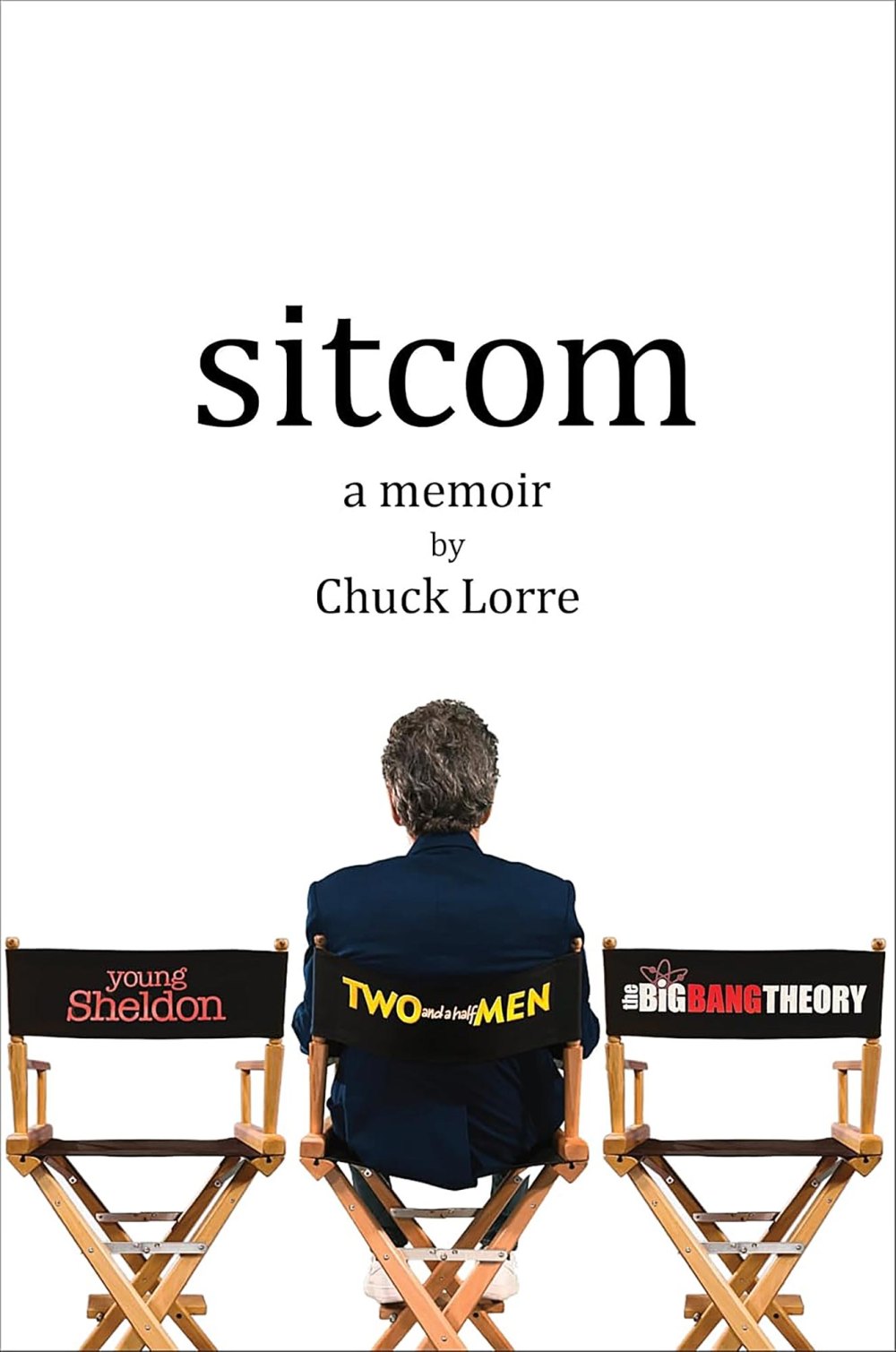
“Whether this was the right time — it felt like the right time. I don’t want to say it was a race against dementia,” Lorre said. “I sat down and started writing, and I discovered that the process of writing this stuff down was cathartic — it was actually a bit of therapy for me.”


Even with a decorated career, Lorre says he isn’t ready to declare any one accomplishment his defining moment and isn’t particularly prepared to pen his own season finale.
“What’s true is that all the pitfalls and missteps and stupidity on my part were clearly necessary for me to make the journey to where I am today, and I’m really grateful for where I am today,” Lorre said. “I’m not unaware of how lucky I’ve been and how many opportunities I’ve had, and gratitude is what people take away from how I view this whole journey.”
If you or someone you know is struggling with substance abuse, contact the Substance Abuse and Mental Health Services Administration (SAMHSA) National Helpline at 1-800-662-HELP (4357).
https://www.samhsa.gov/find-help/national-helpline